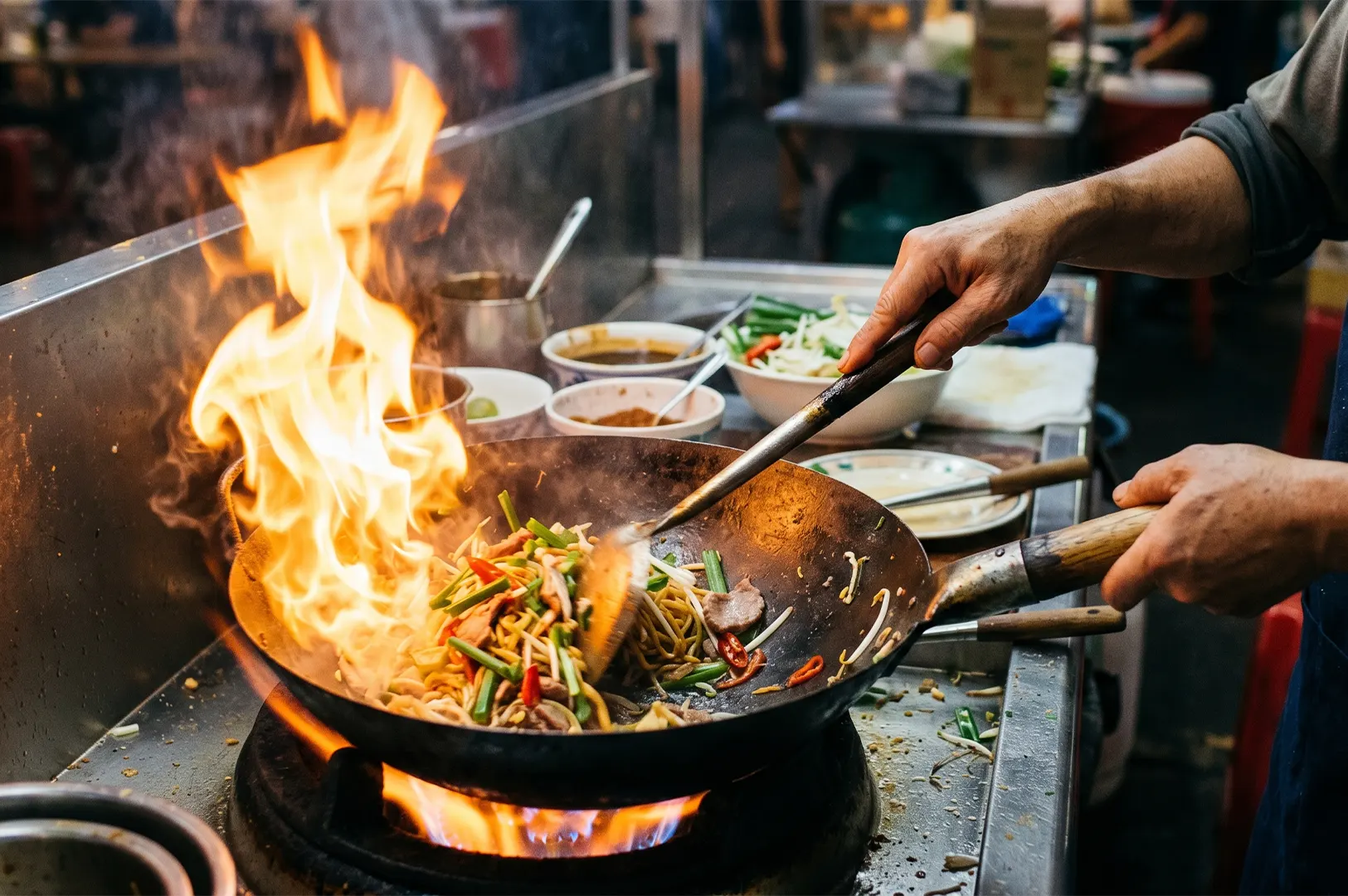
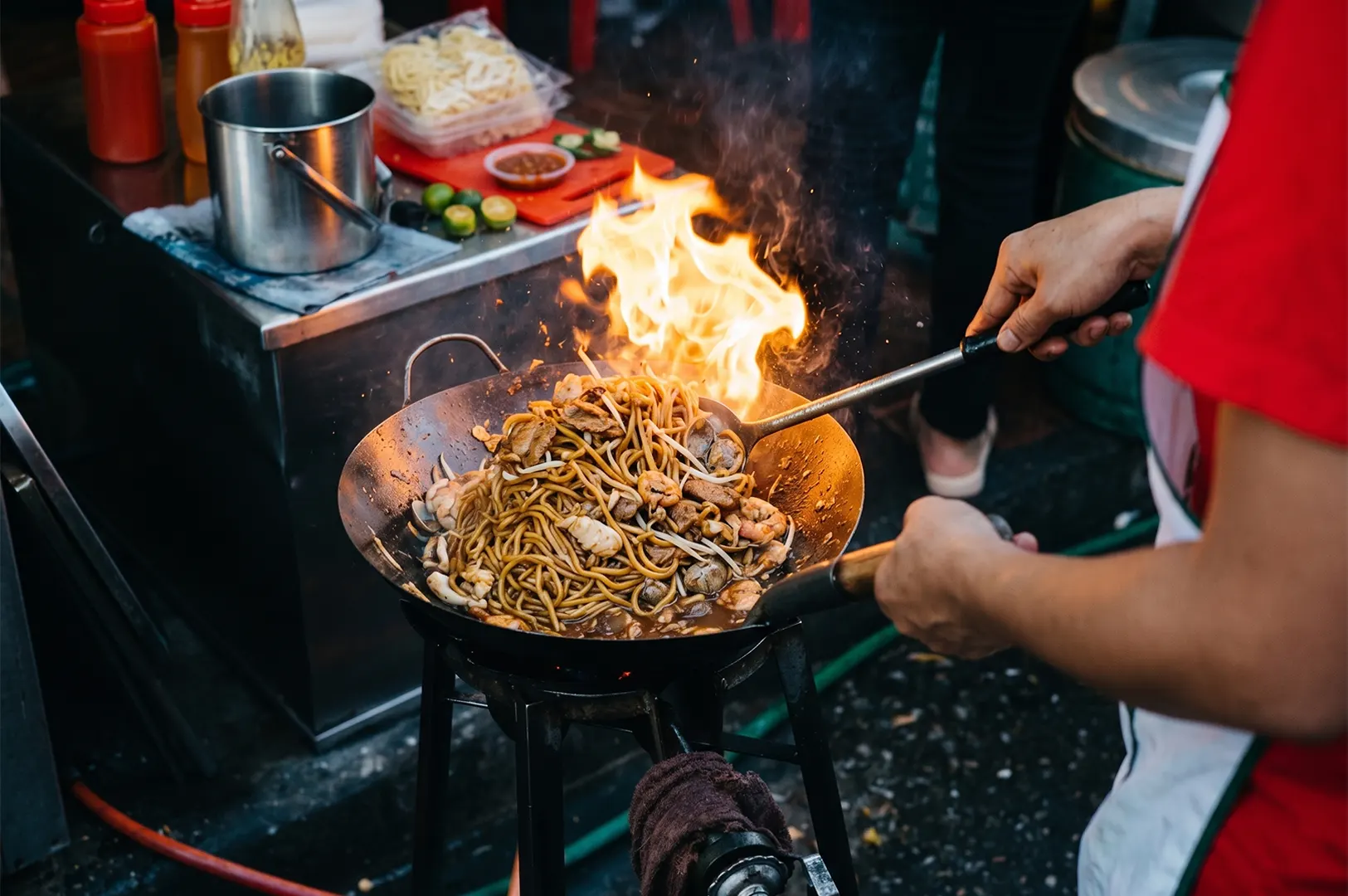
The air hangs thick with humidity and the unmistakable scent of toasted garlic. It is 11:30 PM, and while the city skyline dims, the neon lights of a local food centre buzz to life. You hear the rhythmic scrape of a metal spatula against a seasoned carbon steel wok as the chef expertly stir fries fried hokkien mee in small batches. A massive flame erupts, illuminating the face of an uncle who has been frying noodles since the sun went down.
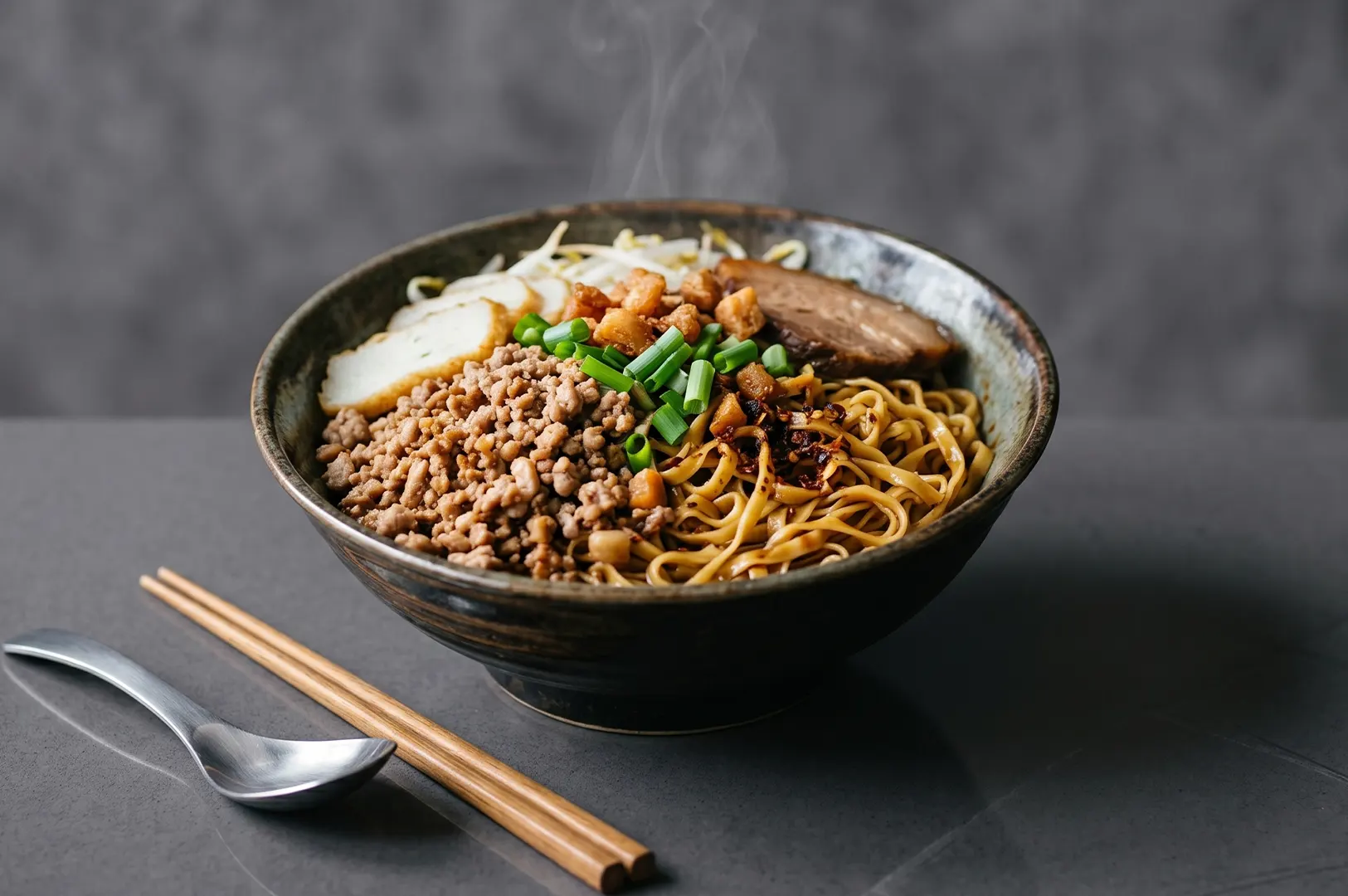
A bright orange plastic plate hits your table with a clatter. On it sits a steaming, glistening bowl of late night fried hokkien mee. You squeeze fresh lime juice over the top, mix in a fiery dollop of sambal belacan, and take your first bite. The rich, oceanic sweetness of prawn broth made from prawn heads and prawn shells coats your tongue, followed instantly by the smoky, charred embrace of wok hei. The crunch of crispy pork lard shatters against the soft, springy egg noodles and rice vermicelli. This is not just a meal. This is a vital slice of Singaporean life.
The Late-Night Craving for Fried Noodles and Why It Hits Different
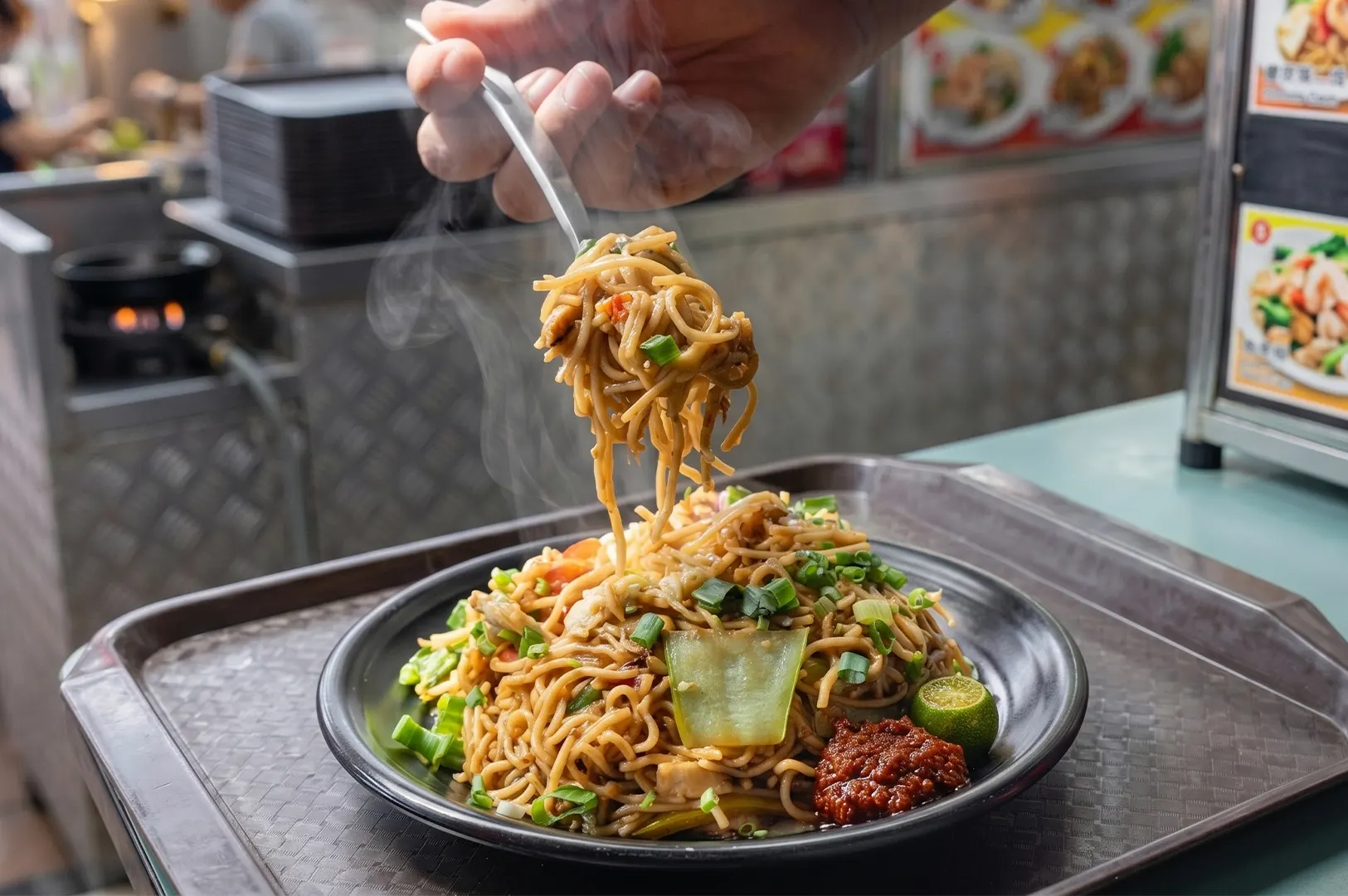
There is something distinctly magical about supper in Singapore. Daylight hours here are dominated by rush hour traffic, crowded MRT trains, and endless meetings. But when the clock strikes ten, the island exhales. The stifling heat breaks. People shed their office clothes for shorts and flip-flops, seeking comfort in open-air tables and familiar flavours.
During these late hours, your body craves something substantial. A light salad simply will not do. You want warmth, depth, and unapologetic savoury goodness. Fried hokkien mee answers that call perfectly. It is hearty without feeling like a brick in your stomach. The steaming gravy soothes a tired mind, while the bright zing of lime juice wakes up your sleepy senses. Enjoying hawker food at night feels like a shared secret among the city residents, a collective rebellion against bedtime.
What “Good” Singapore Fried Hokkien Mee Actually Tastes Like
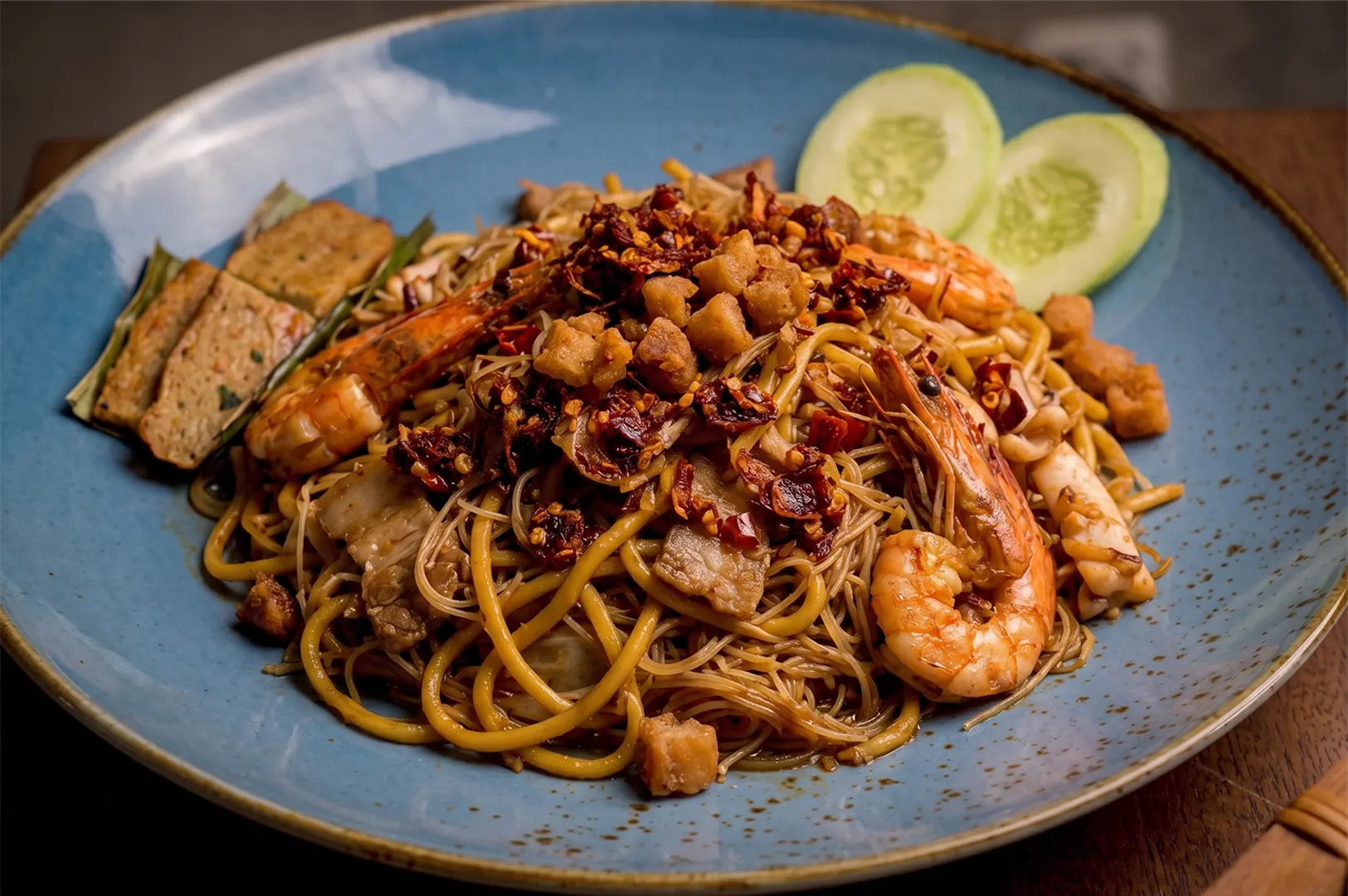
Finding the best fried hokkien mee in Singapore is all about hitting that perfect balance. A truly great plate is like a masterclass in texture and flavor harmony. It starts with the noodles, the ideal mix of thick, yellow egg noodles and thin, white rice vermicelli. The egg noodles give you that satisfying bounce, while the rice vermicelli soaks up all the delicious sauce.
The broth? That’s the real game-changer. It shouldn’t be thin or watery but a rich, sticky, collagen-packed reduction made by simmering prawn heads, prawn shells, dried shrimps, pork bones, and pork fat for hours. When you take a bite, you want to taste the ocean first. Juicy prawns and tender squid rings add a subtle sweetness, while slices of pork belly bring a salty, savory depth.
To balance out all that richness, fresh bean sprouts and cabbage add a nice crunch. And don’t forget the sambal chili on the side, it brings a sweet, earthy heat that perfectly cuts through the pork lard’s richness. This is what makes the best hokkien mee stand out, especially when you’re craving that iconic Singapore hokkien mee experience late at night.
The Invisible Work Behind That Smoky, Saucy Plate of Fried Hokkien Mee
We often scarf down a plate of noodles in minutes, completely unaware of the hours of hard work behind it. The heart and soul of this dish? Its broth. Long before the first customer arrives, hawkers are busy simmering a massive pot filled with prawn heads, prawn shells, dried shrimps, chicken bones, and pork fat. They let it bubble away for hours, coaxing out every bit of flavor until the liquid turns cloudy and irresistibly fragrant.
To keep that broth from tasting fishy, they first stir-fry the prawn heads and shells in oil with garlic until they turn a vibrant orange. This step not only drives off any fishy smell but also releases that signature aroma that makes the broth so special. The broth is then lightly seasoned with white pepper and a touch of sugar to bring out the natural sweetness of the seafood without overpowering it.
Then comes the real show, the stir-fry. The hawker battles a roaring fire, tossing generous heaps of fried hokkien noodles high into the air to catch the intense heat of the wok. This is where the magic of wok hei, or “breath of the wok,” happens that smoky, charred flavor that defines great hokkien mee. The chef ladles the rich broth over the noodles, letting them simmer and soak up all that goodness right in the pan. It takes serious skill to know exactly when to take the dish off the heat so it’s perfectly moist but never soggy.
The Late-Night Crowd at Food Centres: Who Is Eating and Why
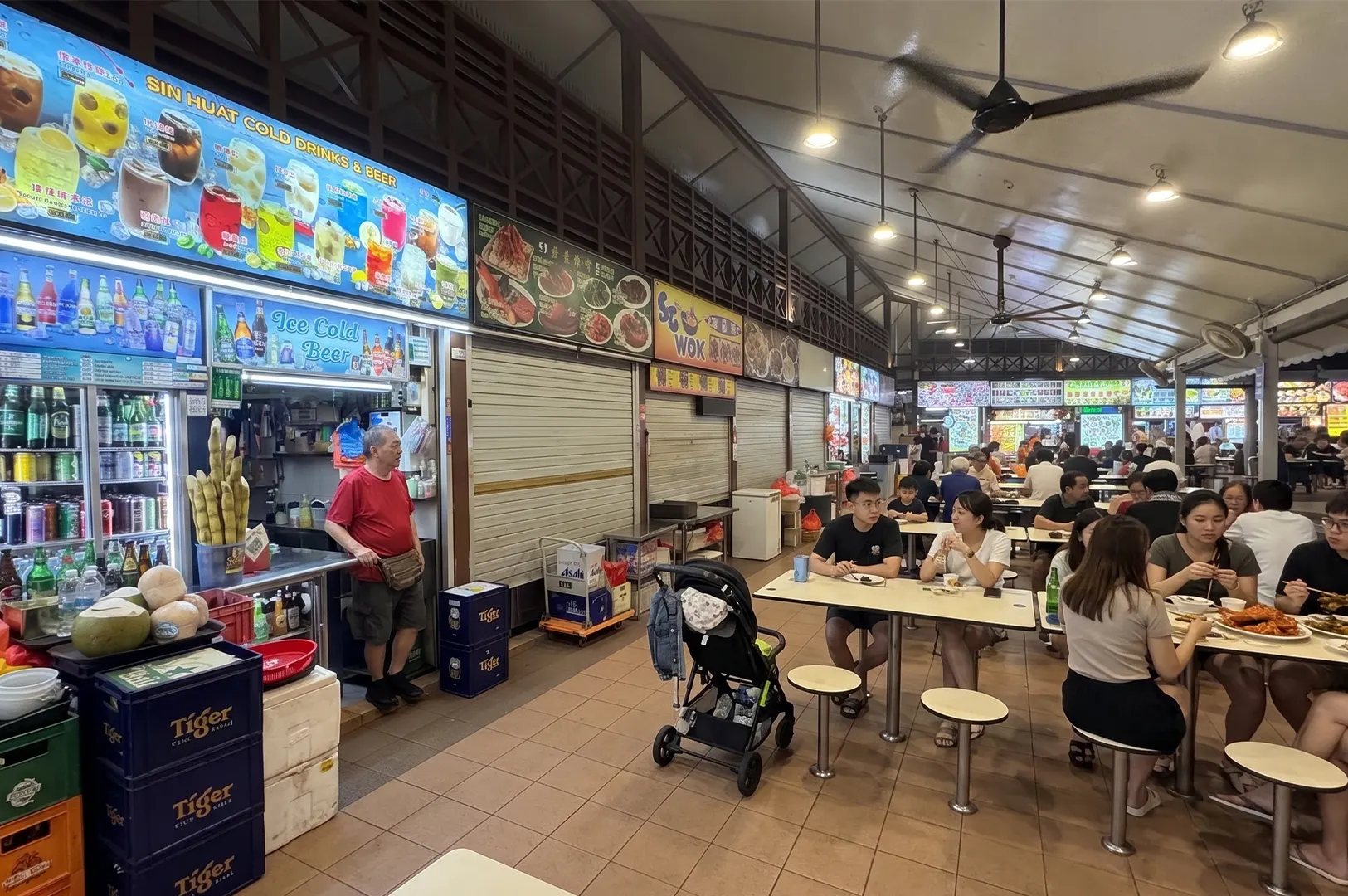
Look around any bustling supper spot, and you will see a beautiful cross-section of society. The late-night hawker centre is a great equalizer. To your left, a group of cyclists in bright spandex lean their expensive bikes against a railing, replacing calories burned on a long night ride. To your right, a couple on a casual date share a single plate, their chopsticks bumping in the middle.
You will also find taxi drivers grabbing a quick bite during their shift, hospital staff unwinding after a grueling rotation, and groups of friends laughing over icy glasses of sugarcane juice. These food centres serve as community hubs. They offer a welcoming, brightly lit sanctuary for anyone awake while the rest of the world sleeps.
How to Order and Customize Your Fried Hokkien Mee Like a Pro at Stalls Like Nam Sing and Kim Keat Hokkien Mee
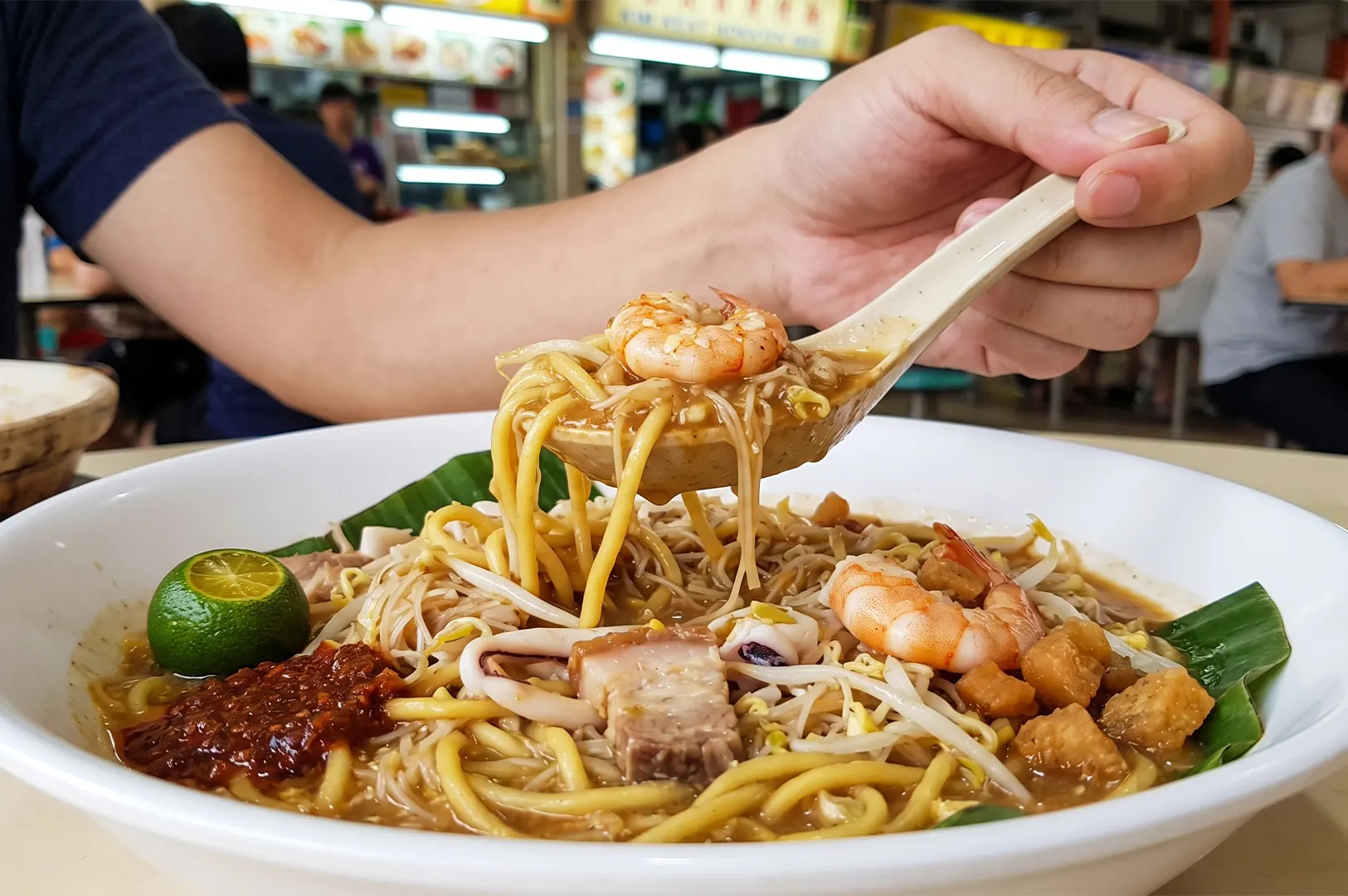
Stepping up to a wok that is shooting flames can feel a bit intimidating. However, knowing exactly what to ask for ensures you get a plate tailored to your exact tastes.
When you approach the stall, start by stating your portion size. Most stalls offer small, medium, or large plates. If you love heat, ask the uncle for extra sambal belacan. Many old-school versions allow you to request more crispy pork lard cubes, known locally as fried lard or chu yau char. Just say “more pork lard, please,” and watch the cook shower your noodles with crunchy golden nuggets.
Some stalls even let you request a “wetter” or “drier” version. A wet version comes swimming in thick gravy, while a dry version features noodles that have absorbed almost all the liquid, resulting in a slightly stickier, more intense chew.
What to Look For (and What to Avoid) When You Are Hungry at 11 PM for the Best Fried Hokkien Mee in Singapore
Not all late-night plates are created equal. If you find yourself wandering around some stalls in Ang Mo Kio or other parts of Singapore, keep a few key indicators in mind.
Signs you are about to get a good plate:
The chef is cooking in small batches: This ensures every single strand of fried hokkien mee gets equal time against the hot metal.
A mountain of fresh prawn shells sits nearby: This tells you the seafood broth is made from scratch, right on the premises.
The sambal looks dark and chunky: A good chili paste is usually homemade, toasted with belacan (shrimp paste) for a deep, complex flavour.
A constant, roaring flame: High heat is absolutely non-negotiable for achieving that essential wok hei.
Red flags to avoid:
Massive piles of pre-cooked noodles: If the noodles are just sitting in a tray waiting to be scooped, they will likely be soggy and lack any smoky flavour.
Pale, watery gravy: The sauce should be dark and rich, not translucent, often enhanced with dark soy sauce or soy sauce for that signature salty-sweet balance.
No fresh lime: The calamansi lime or lime juice is essential for balancing the heavy pork fat. If a stall skips it, walk away.
The Night Is Still Young at Singapore’s Food Centres Serving Fried Hokkien Mee
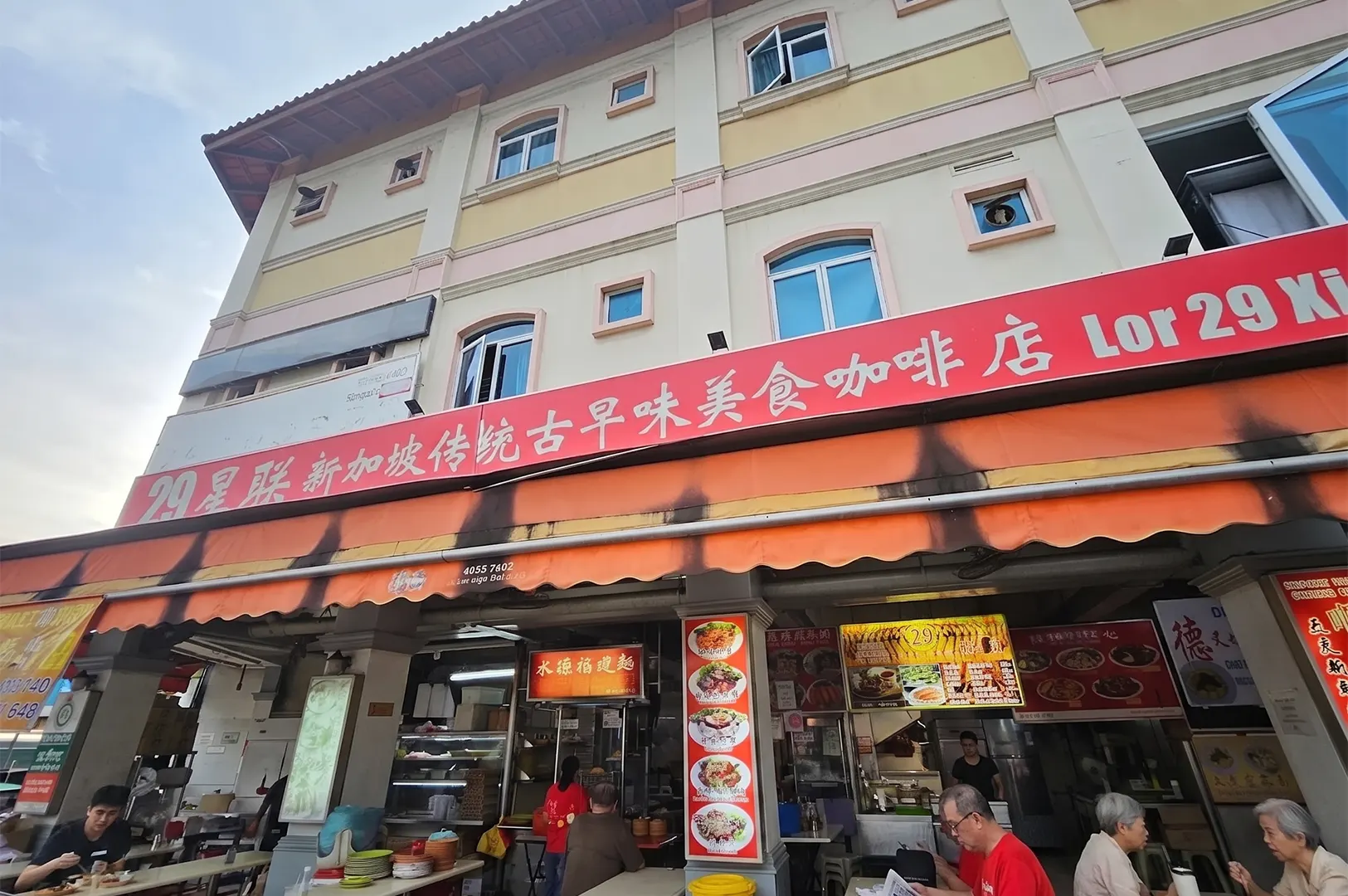
The next time you find yourself awake past midnight with a rumbling stomach, resist the urge to open a delivery app. Step outside instead. Let the warm night air guide you toward the clatter of woks and the hum of friendly chatter.
Singapore street food culture shines brightest when the sun goes down. A plate of late night fried hokkien mee offers more than just sustenance. It offers a connection to the hardworking people who keep this island fed, one fiery wok at a time. Go out, find a plastic table under a glowing fluorescent tube, and taste the magic for yourself at stalls like Swee Guan, Nam Sing, Kim Keat Hokkien Mee, or any beloved hawker stall serving this iconic dish.
Do you have a favourite late-night noodle stall you swear by? Leave a comment below to share your top supper spots, and make sure to bookmark the SG Street Eats Blog for more late-night hawker adventures.