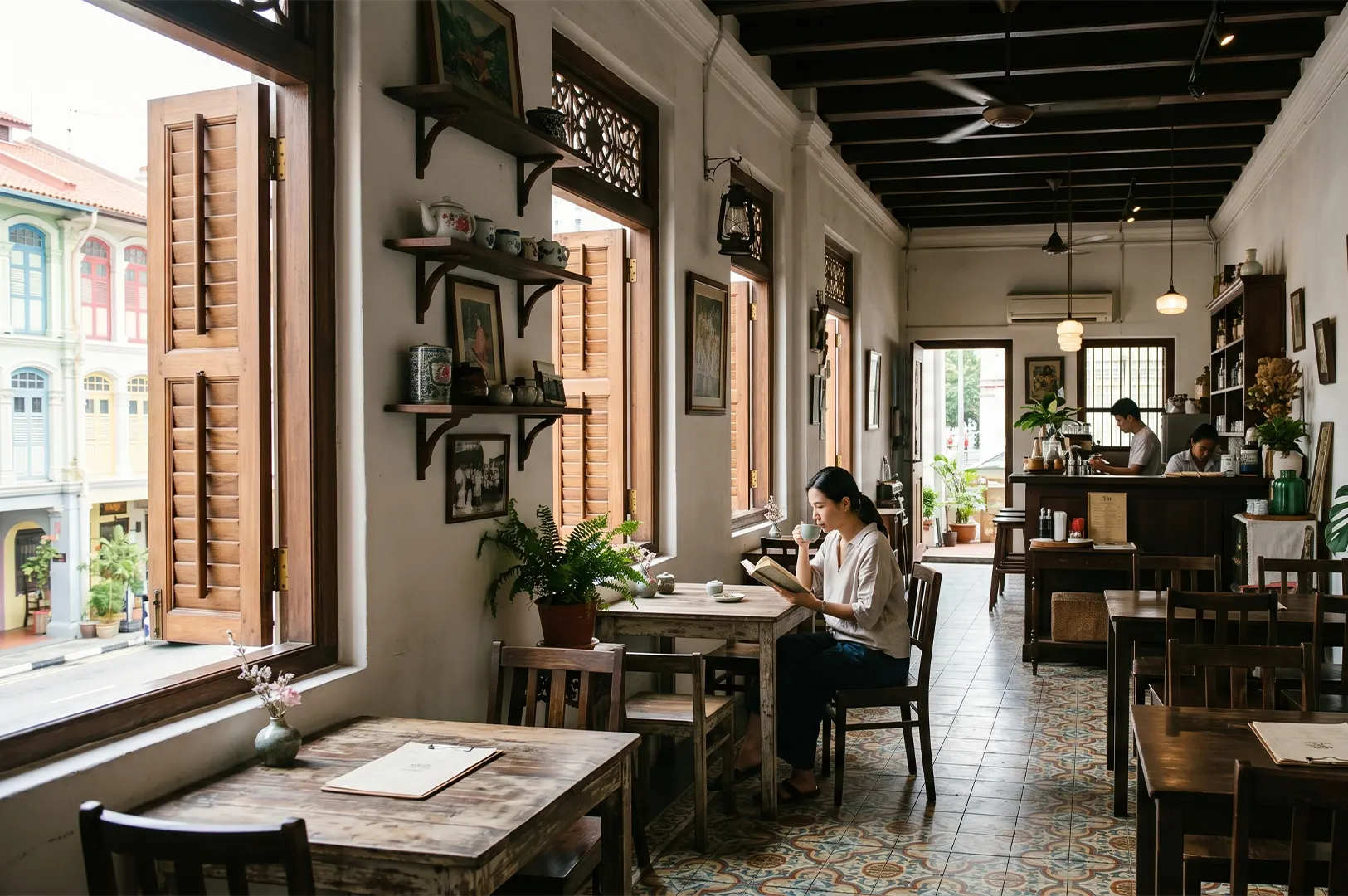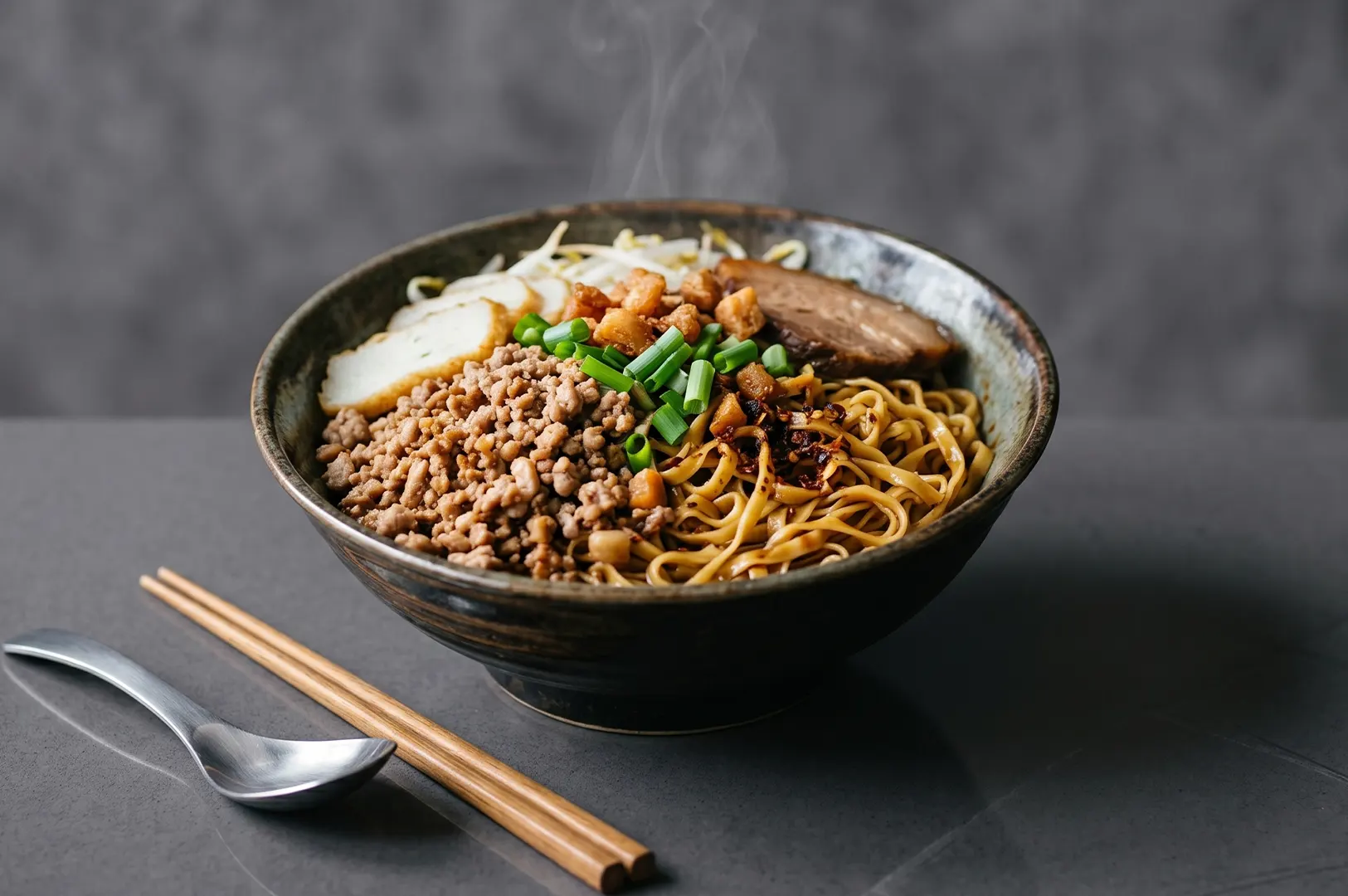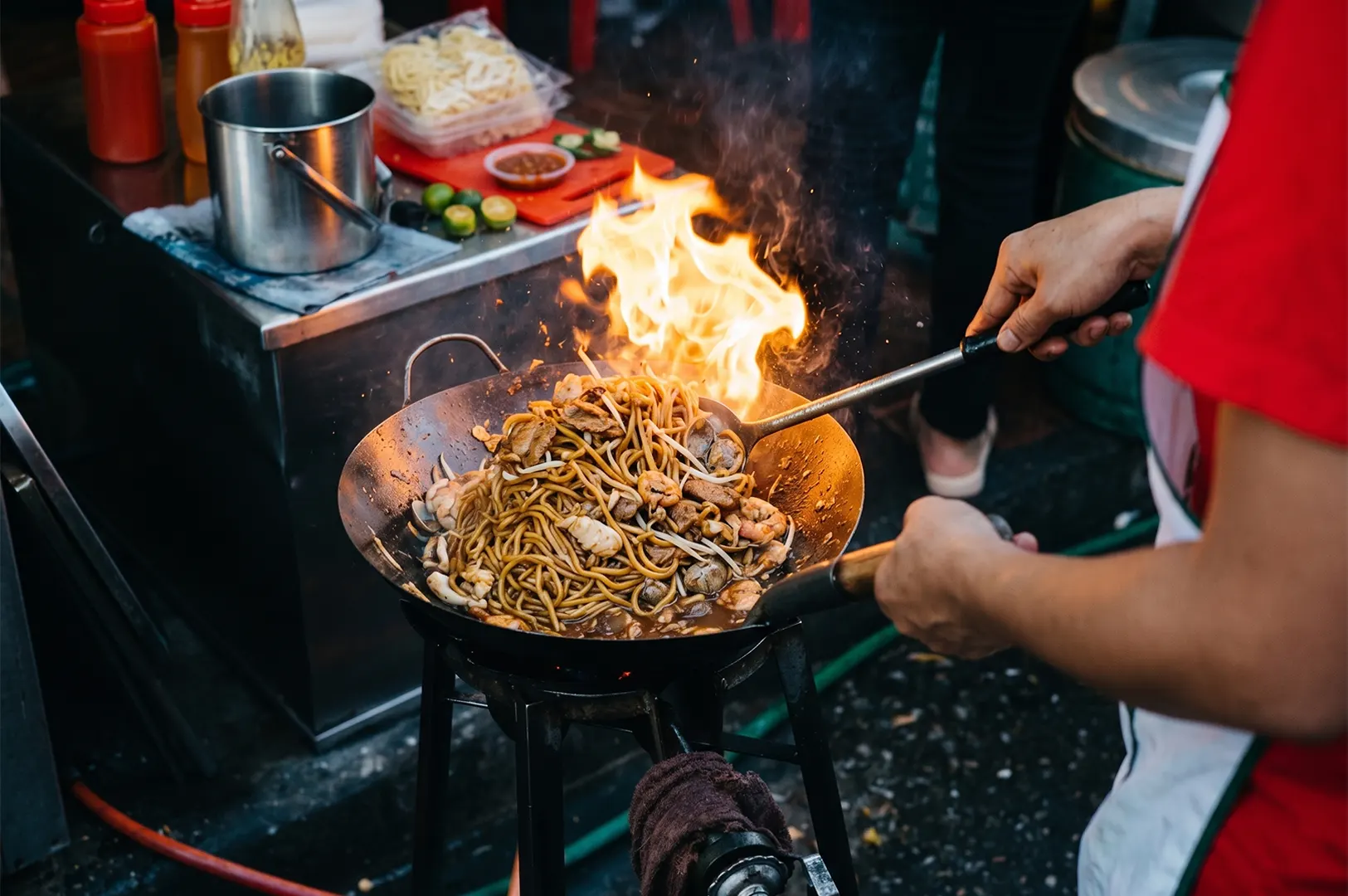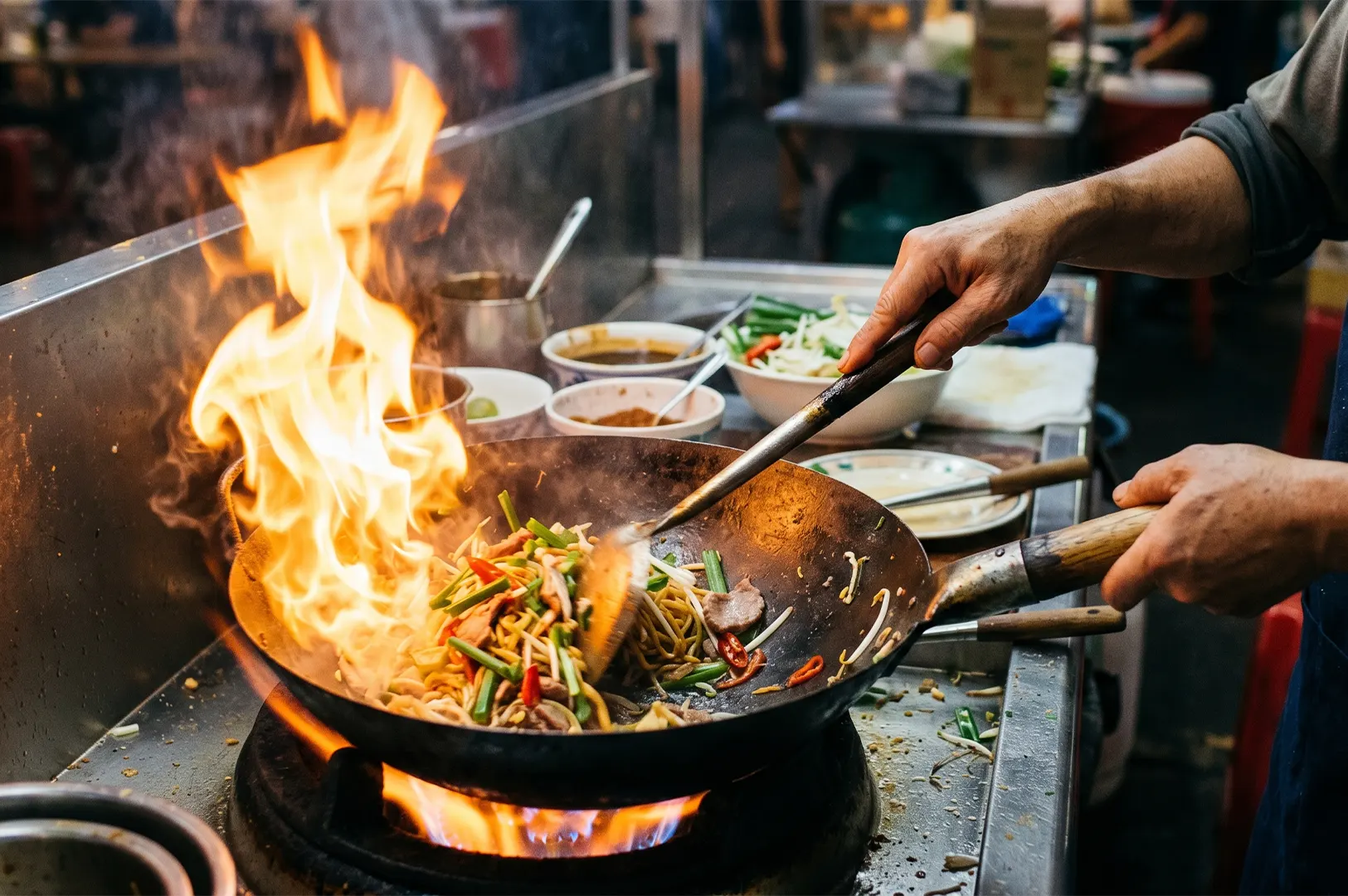
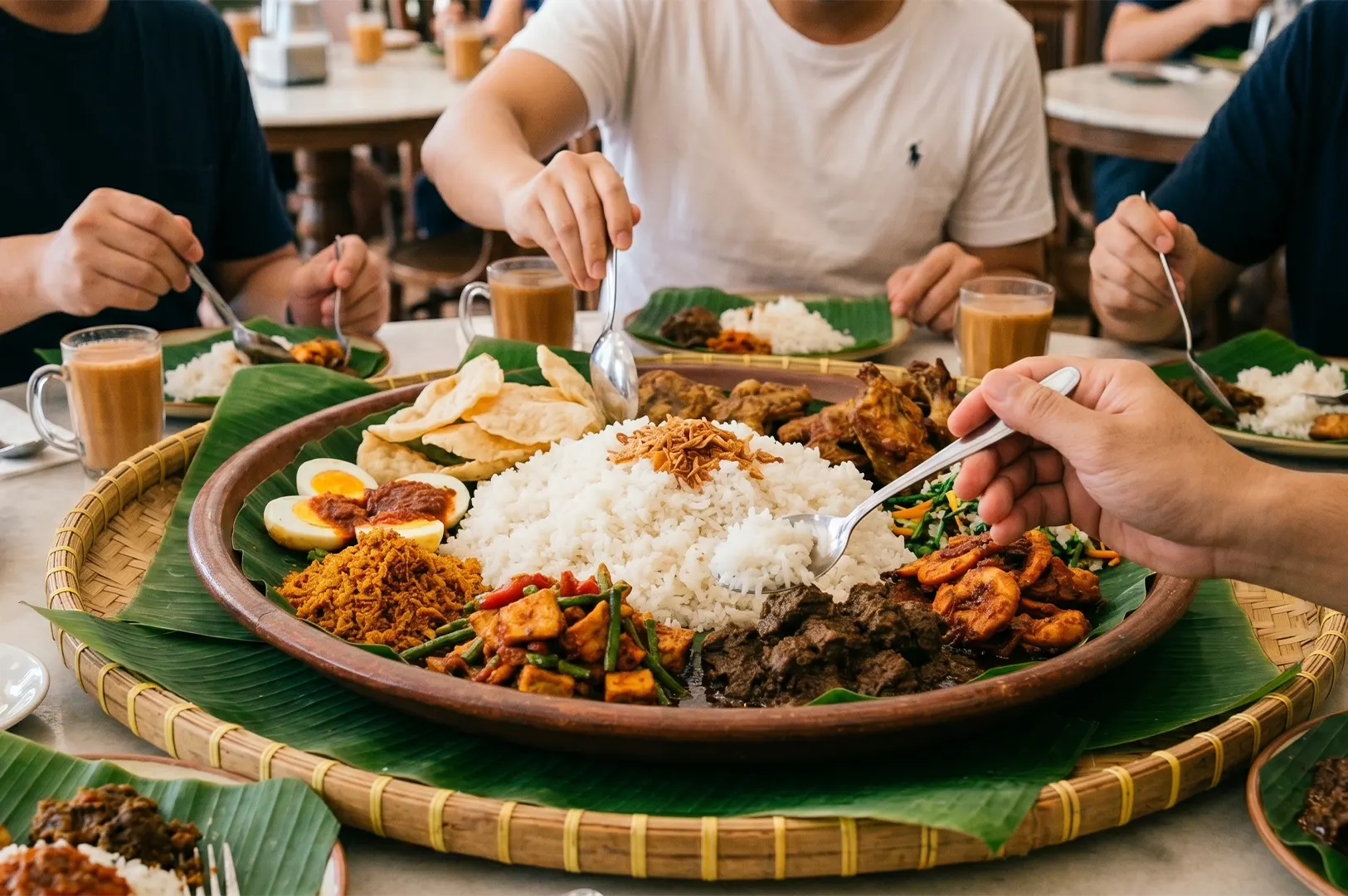
Walk into any bustling food centre in Singapore, and your senses are immediately hijacked by the most intoxicating aromas of Malay cuisine. You smell toasted belacan, rich coconut milk, and the deep, earthy warmth of complex spice pastes known as rempah. Malay food in Singapore is not just a cuisine. It is a vibrant celebration of kampung heritage and family recipes passed down through generations within the Malay community.
Traditional Malay dishes form the soulful backbone of our local hawker culture. From quick morning breakfasts featuring roti canai and teh tarik to massive communal feasts that embody the gotong-royong spirit of mutual help and sharing, these flavors bring people together.
If you are wondering what to eat in this food-obsessed city, you are in the right place. We are going to explore the absolute best Malay dishes you can find, showing you exactly what to order and how to eat like a true local.
The Ultimate List of Malay Dishes and Best Malay Food Singapore Has to Offer
Here are ten classic kampung-style flavors and beloved staples that you absolutely must try when exploring the Malay food scene in Singapore, influenced by the Malay Archipelago and local tastes.
1. Nasi Lemak: The Iconic Malay Food Staple
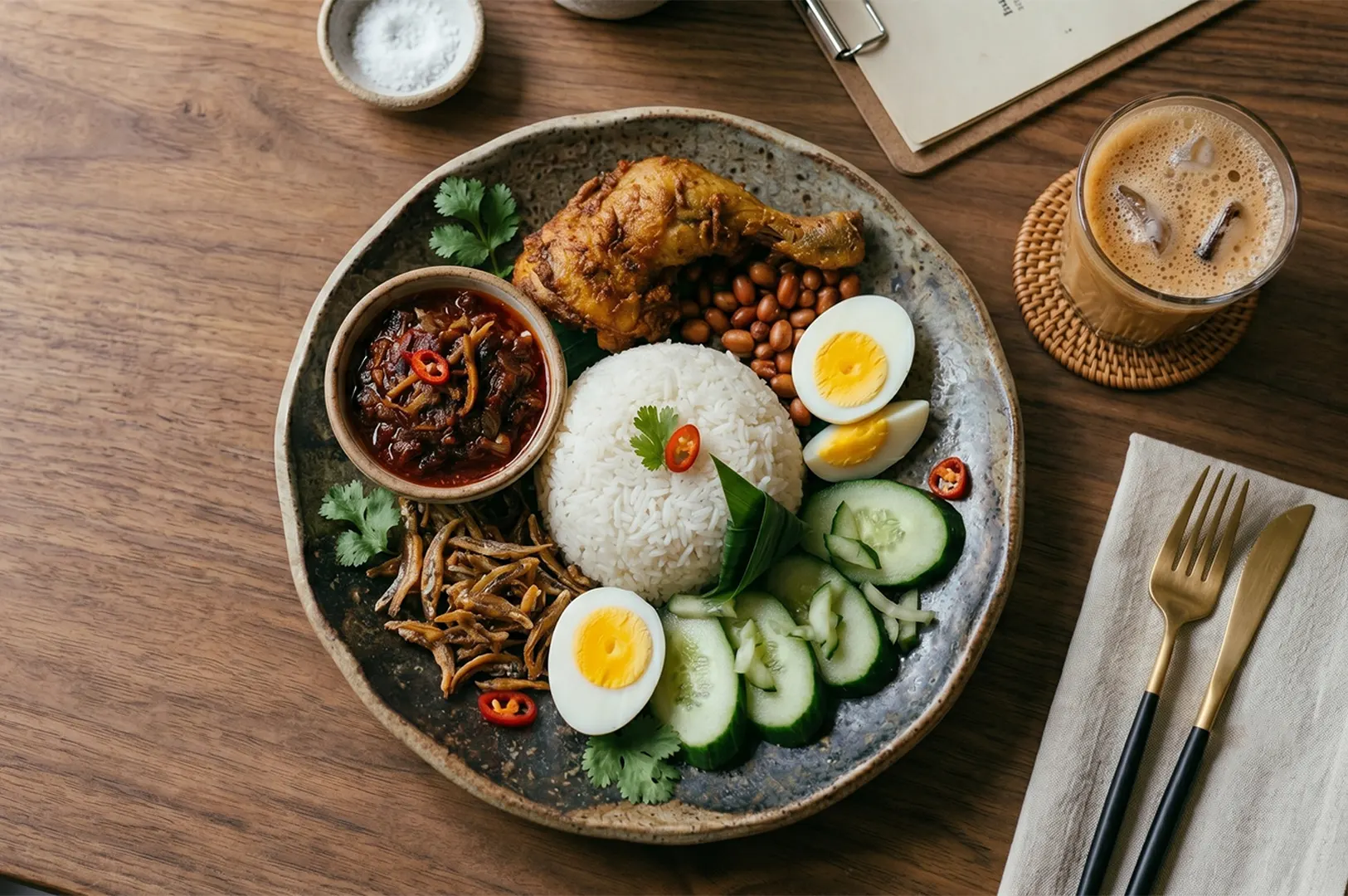
Nasi lemak is arguably the most famous dish in the region and a cornerstone of Malay cuisine. It features fragrant rice cooked in coconut milk and pandan leaves, traditionally served with various savory sides.
What makes it great: The rice must be fluffy and deeply aromatic, never mushy. The real star is the sambal, which perfectly balances sweet, spicy, and savory notes. Traditionally served with hard boiled egg, fried anchovies, peanuts, and cucumber, it is a coconut rich meal that delights the palate.
Where to eat it: You will find this everywhere from dedicated hawker centre stalls to early morning wet market vendors, including Jalan Pisang and Joo Chiat Road.
How to order like a local: Always ask for extra sambal and a side of crunchy ikan bilis (fried anchovies). Pair it with a strong brew of black tea blended with condensed milk or a cup of teh tarik for the ultimate morning fuel.
2. Nasi Padang: A Feast of Malay Dishes
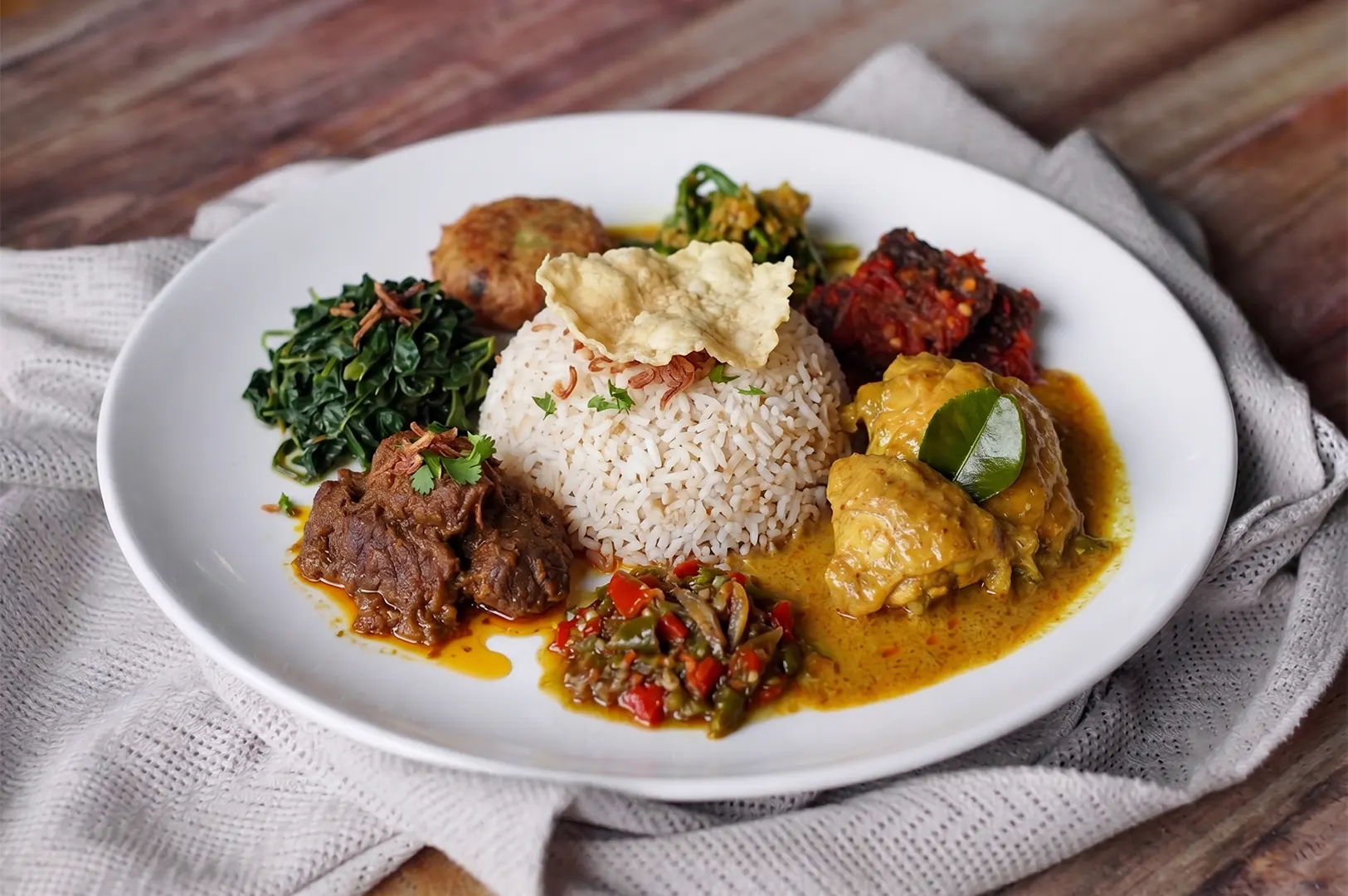
Nasi padang isn’t just one dish, it’s a whole feast! Imagine a plate of steamed rice surrounded by a colorful spread of pre-cooked meats, chicken curry, rich curries, and veggies. It’s the kind of meal you enjoy during special occasions or family gatherings, really capturing the spirit of Malay communal dining.
This tasty Malay food in Singapore shows off influences from both Chinese cuisine and local Malay flavors, and some versions even include bean sprouts and pork for an extra twist.
What makes it great: Variety is the magic here. A stellar nasi padang stall offers rich, thick curries, perfectly fried proteins, and vibrant vegetable dishes like sayur lodeh and sambal goreng that all melt together on your plate.
Where to eat it: Look for specialized nasi padang eateries in heritage districts or large corner stalls in neighborhood kopitiams.
How to order like a local: Point to exactly what you want. A classic combination includes beef rendang, sayur lodeh (vegetables in coconut broth), and a generous scoop of flavorful gravy (kuah) drenched over your rice.
3. Beef Rendang: Minangkabau Cuisine at Its Finest
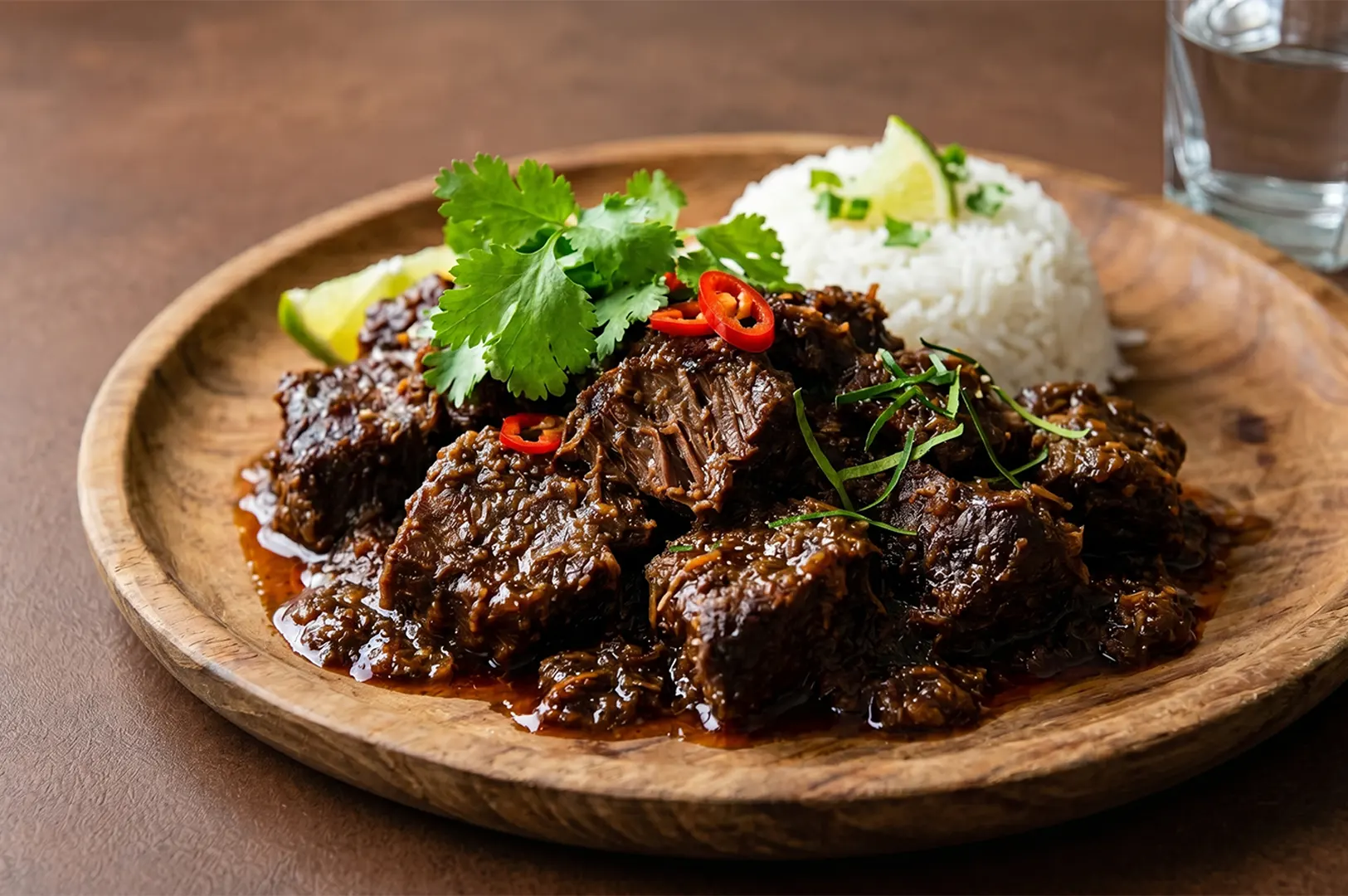
Beef rendang is a dry curry where beef is slow-cooked in coconut milk and a heavy mixture of lemongrass, galangal, and garlic until the liquid completely evaporates. This cooking process allows the flavors to intensify and the meat to become incredibly tender, making it a delicious and hearty dish.
It’s a perfect example of how Malay cuisine balances rich, aromatic spices with a comforting, satisfying texture.
What makes it great: The meat must be tender enough to pull apart with a spoon. The caramelized spice coating should be intensely savory and packed with roasted coconut flavors, reflecting the influence of Minangkabau cuisine from Peninsular Malaysia.
Where to eat it: This is a premium staple at any reputable nasi padang stall or traditional Malay restaurant like Rumah Makan Minang.
How to order like a local: Pair it with a side of refreshing acar (pickled vegetables) or gado gado, a vegetable salad topped with rich peanut sauce.
4. Lontong: Rice Cakes in Coconut Vegetable Stew
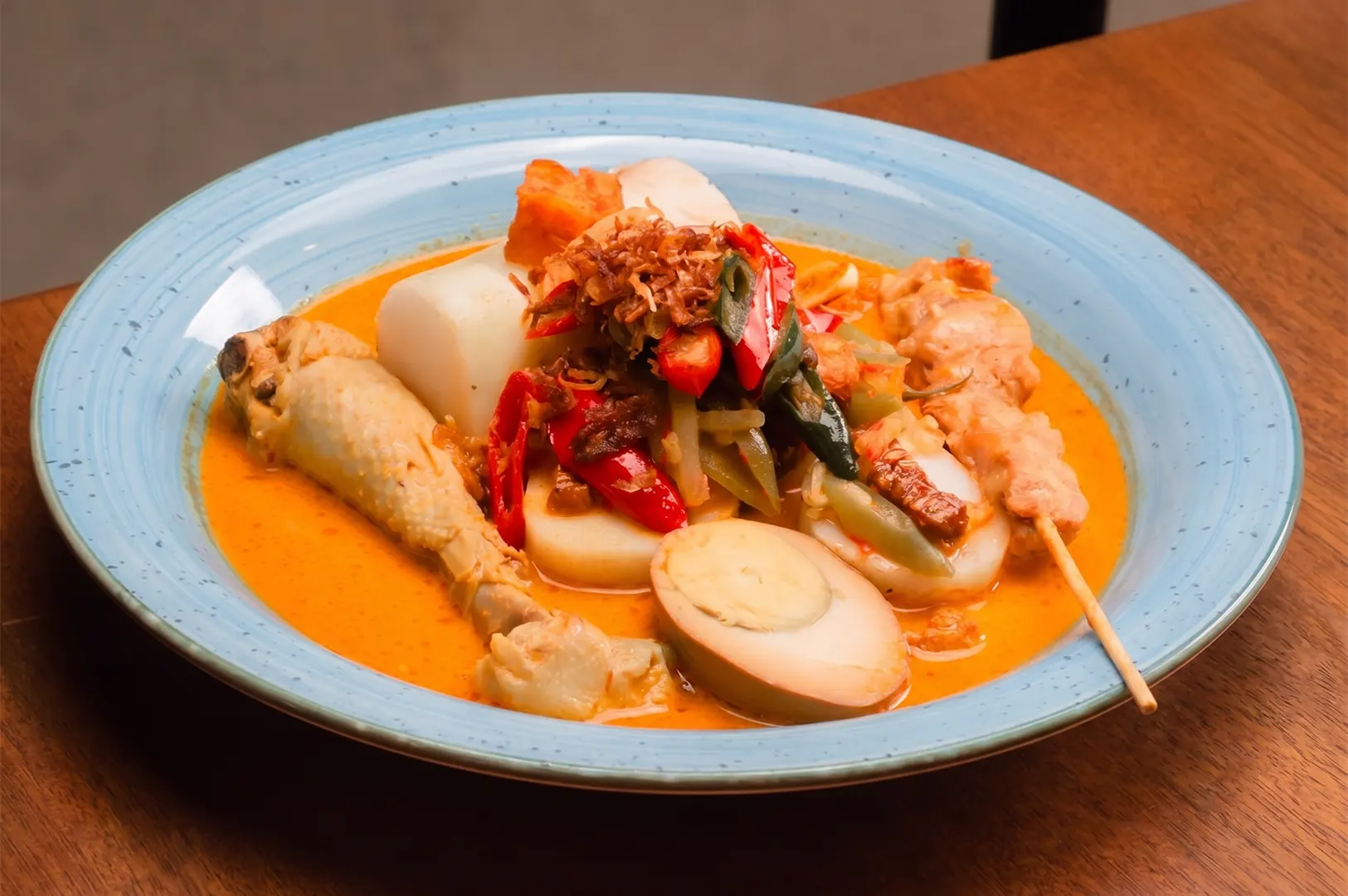
Lontong consists of compressed rice cakes made from rice flour, bathed in a mild, sweet, and incredibly rich coconut vegetable stew known as sayur lodeh, which includes cabbage, long beans, and fried tofu. It is a beloved breakfast dish in Singapore and is often accompanied by a side of spicy sambal to enhance its flavors.
Unlike some Malay dishes that are eaten raw or lightly cooked, lontong is always served warm and comforting, highlighting the use of slow-simmered coconut milk in its preparation.
What makes it great: The rice cakes must be firm enough to hold their shape but soft enough to absorb the golden, turmeric-infused broth.
Where to eat it: This is a highly popular breakfast item found in many Malay hawker stalls across Singapore.
How to order like a local: Request a topping of serunding (spiced grated coconut) and a dollop of sambal to elevate the mild broth with a smoky, spicy kick.
5. Satay: Grilled Skewers with Peanut Sauce
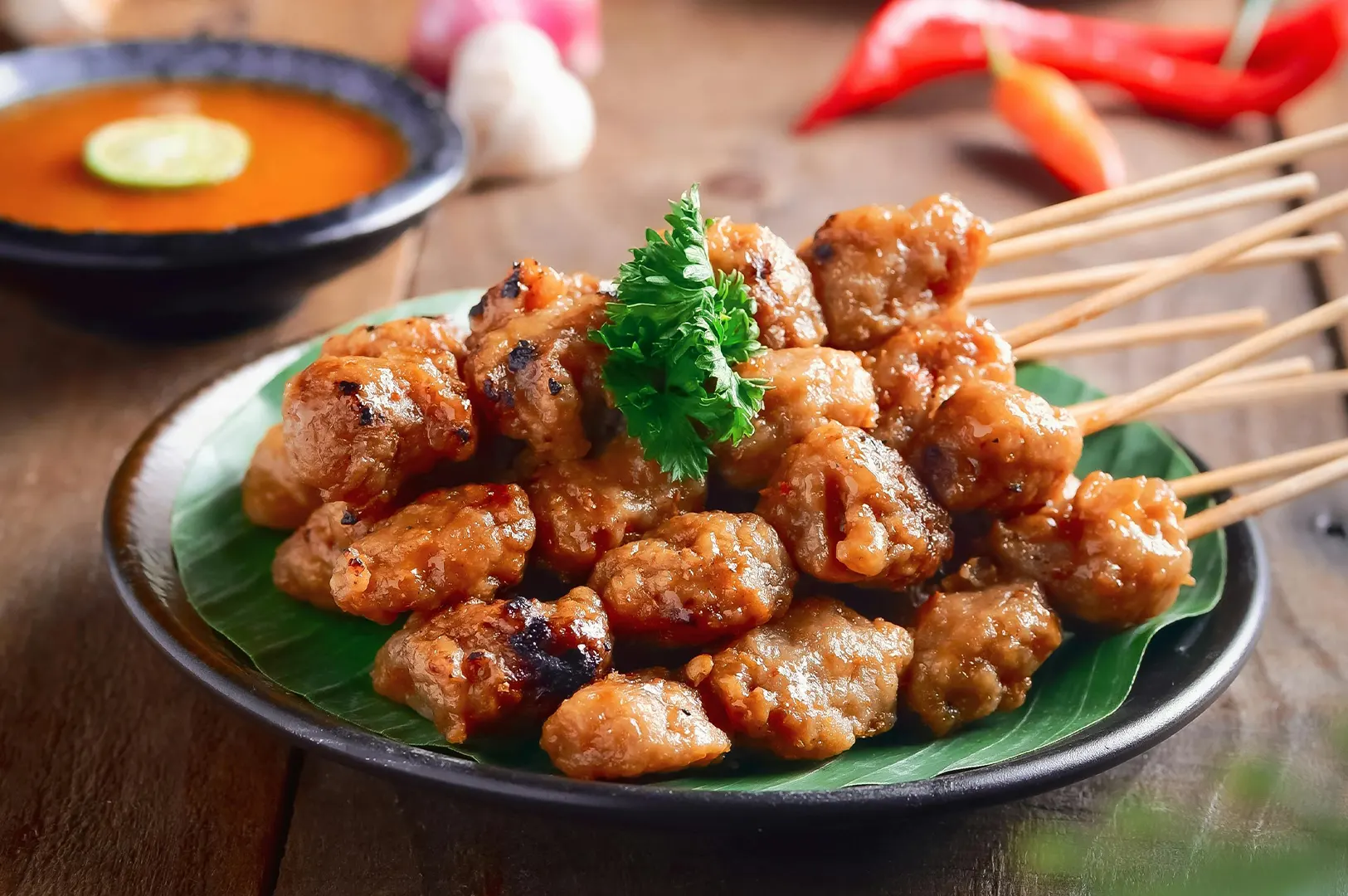
Satay involves small pieces of marinated meat skewered on bamboo sticks and grilled over a roaring charcoal fire.
What makes it great: The meat needs a heavy, sweet marinade and a slightly charred exterior. The accompanying peanut sauce must be thick, nutty, and slightly spicy.
Where to eat it: Satay shines brightest at night in open-air hawker centres and bustling pasar malam (night markets).
How to order like a local: Order a mix of chicken and mutton. Ask for extra ketupat (rice cakes wrapped in banana leaves) and raw onions to dip into your leftover peanut sauce.
6. Mee Rebus: Yellow Egg Noodles in Sweet Potato Gravy
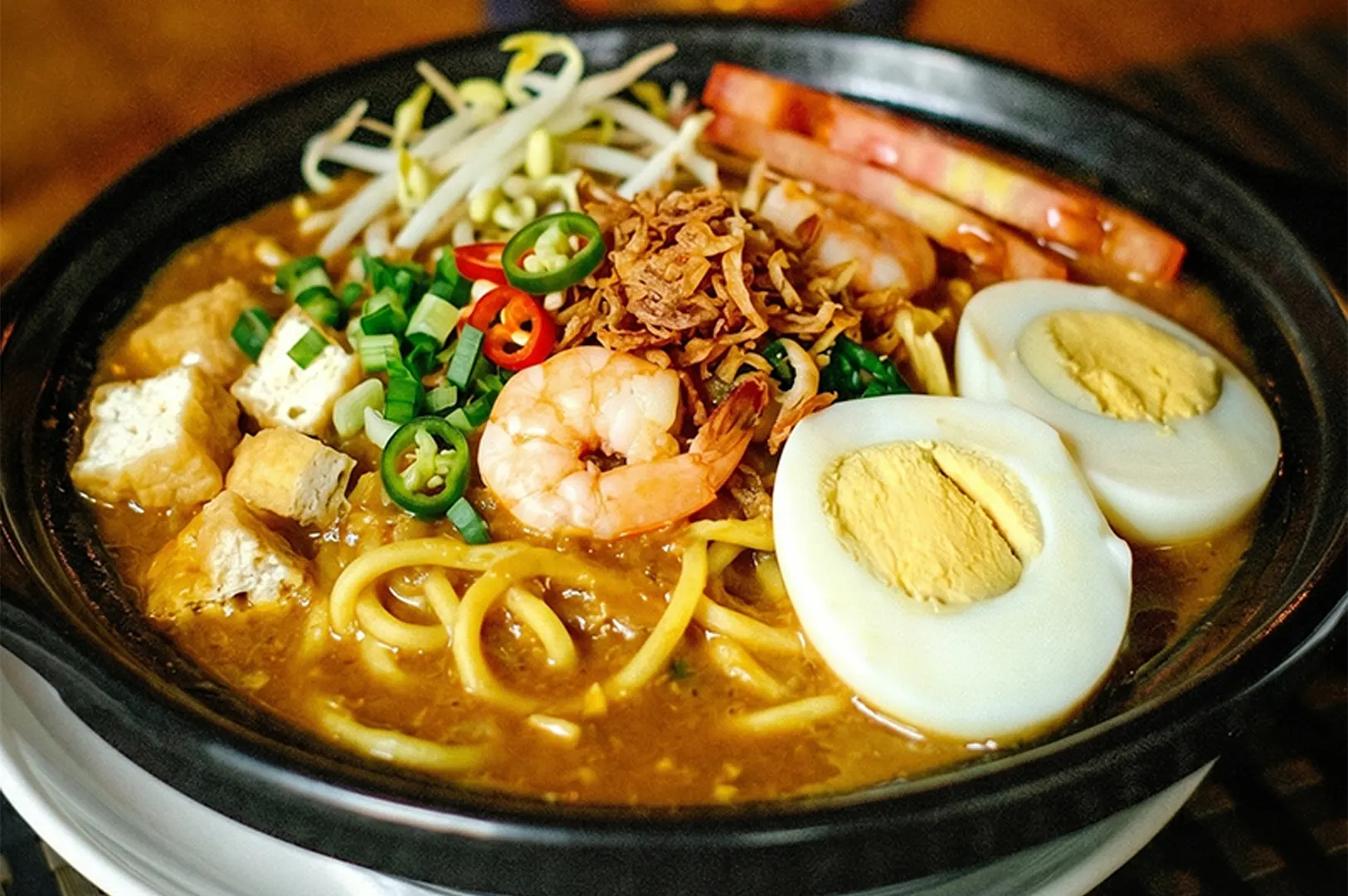
Mee rebus translates to “boiled noodles” and features thick yellow egg noodles submerged in a thick, sweet, and savory sweet potato-based gravy.
What makes it great: The gravy is everything. It should be viscous, nutty, and slightly sweet, coating every single strand of noodle, topped with fried shallots, hard boiled egg, and fried tofu.
Where to eat it: It is a common fixture at stalls selling other noodle dishes like mee soto, found in almost every neighborhood food centre.
How to order like a local: Squeeze the provided calamansi lime all over the dish before mixing. The sharp citrus perfectly balances the heavy, starchy gravy.
7. Soto Ayam: Traditional Chicken Curry Soup
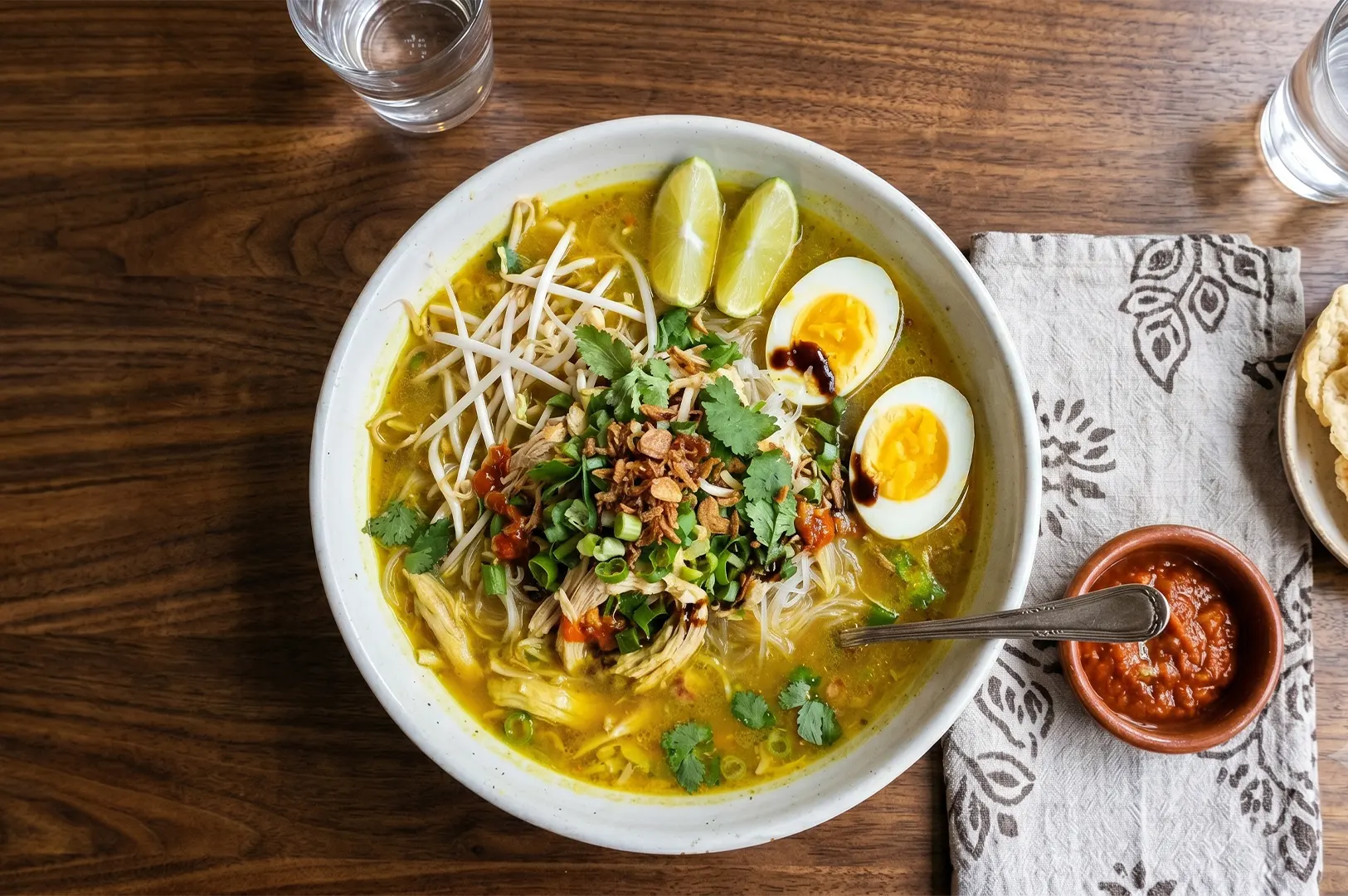
Soto ayam is a comforting, golden chicken broth served with either yellow noodles or rice cakes. It is often garnished with boiled eggs, fried shallots, and fresh herbs like cilantro and spring onions, adding layers of texture and flavor.
This dish reflects the rich blend of spices typical in Malay cooking, including turmeric, ginger, and lemongrass, which give the broth its distinctive aroma and color. Soto ayam is commonly enjoyed as a hearty breakfast or light lunch, especially in hawker centres and traditional Malay eateries across Singapore.
What makes it great: A proper soto broth takes hours to brew, resulting in a deeply spiced, savory chicken soup packed with coriander, cumin, star anise, and turmeric.
Where to eat it: You can easily spot this at traditional Malay hawker stalls alongside other breakfast classics.
How to order like a local: Ask the vendor for sambal kicap (a fiery mix of soy sauce and bird’s eye chilies). Dip your shredded chicken into it for a massive flavor explosion.
8. Nasi Kandar: Malaysian Food with Indian Muslim Influence
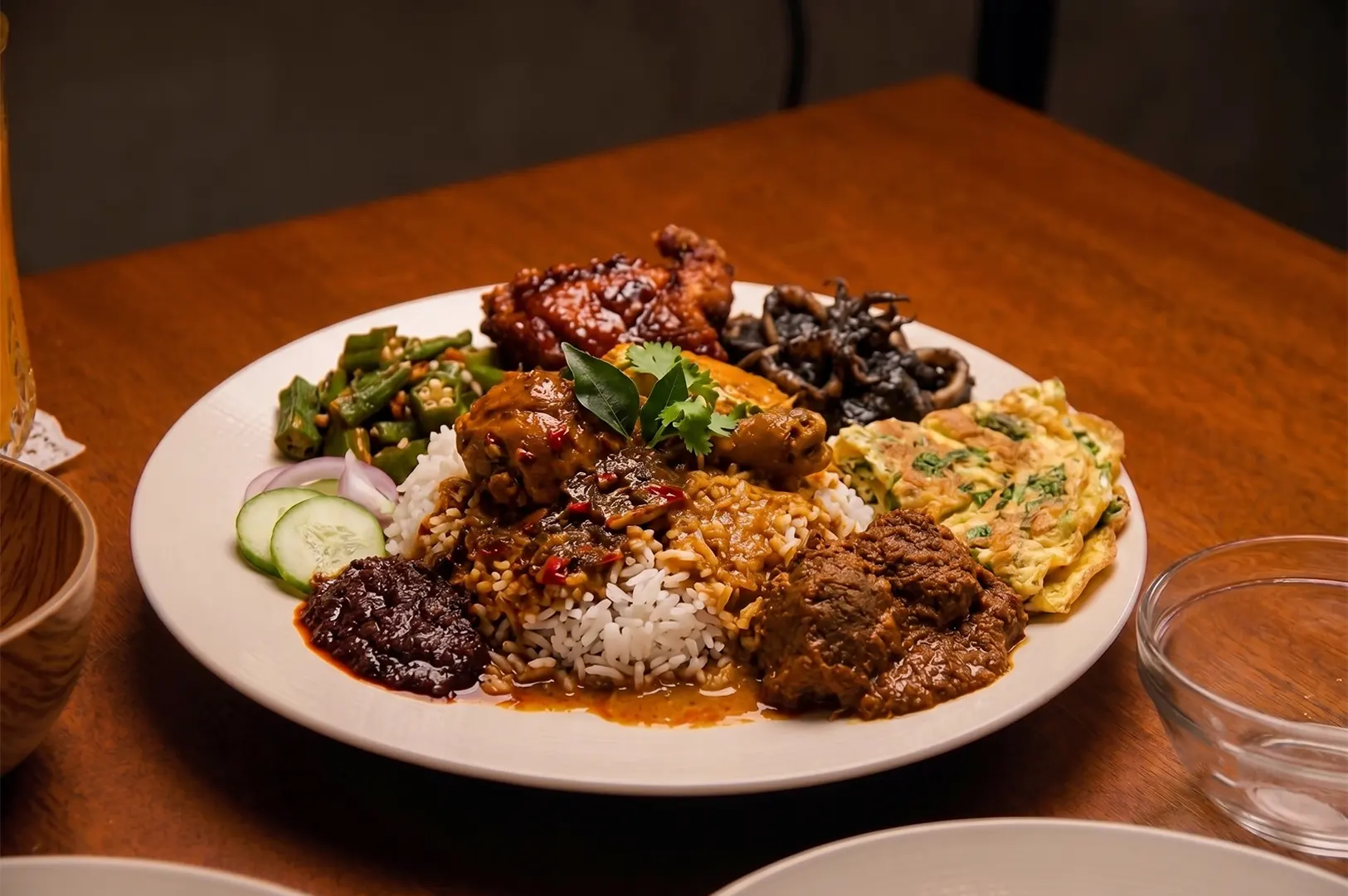
Nasi kandar is a popular Malaysian food dish featuring steamed rice served with various side dishes like chicken curry, prawns, and vegetables, often accompanied by a rich assortment of curries and gravies. This dish reflects the Indian Muslim influence on Malay cuisine, combining fragrant spices and bold flavors that make each serving uniquely satisfying.
Its communal style of dining, where diners mix and match different curries and sides, embodies the vibrant food culture of the region.
What makes it great: The combination of various ingredients and spicy curry sauces creates a unique taste that reflects the cultural mix of Peninsular Malaysia and Singapore.
Where to eat it: Nasi kandar stalls can be found in many hawker centres, offering generous portions perfect for a hearty meal.
How to order like a local: Mix and match your favorite curries and side dishes, and enjoy with a glass of strong brew black tea blended with condensed milk.
9. Roti Tissue: Crispy Thin Pancake Delight
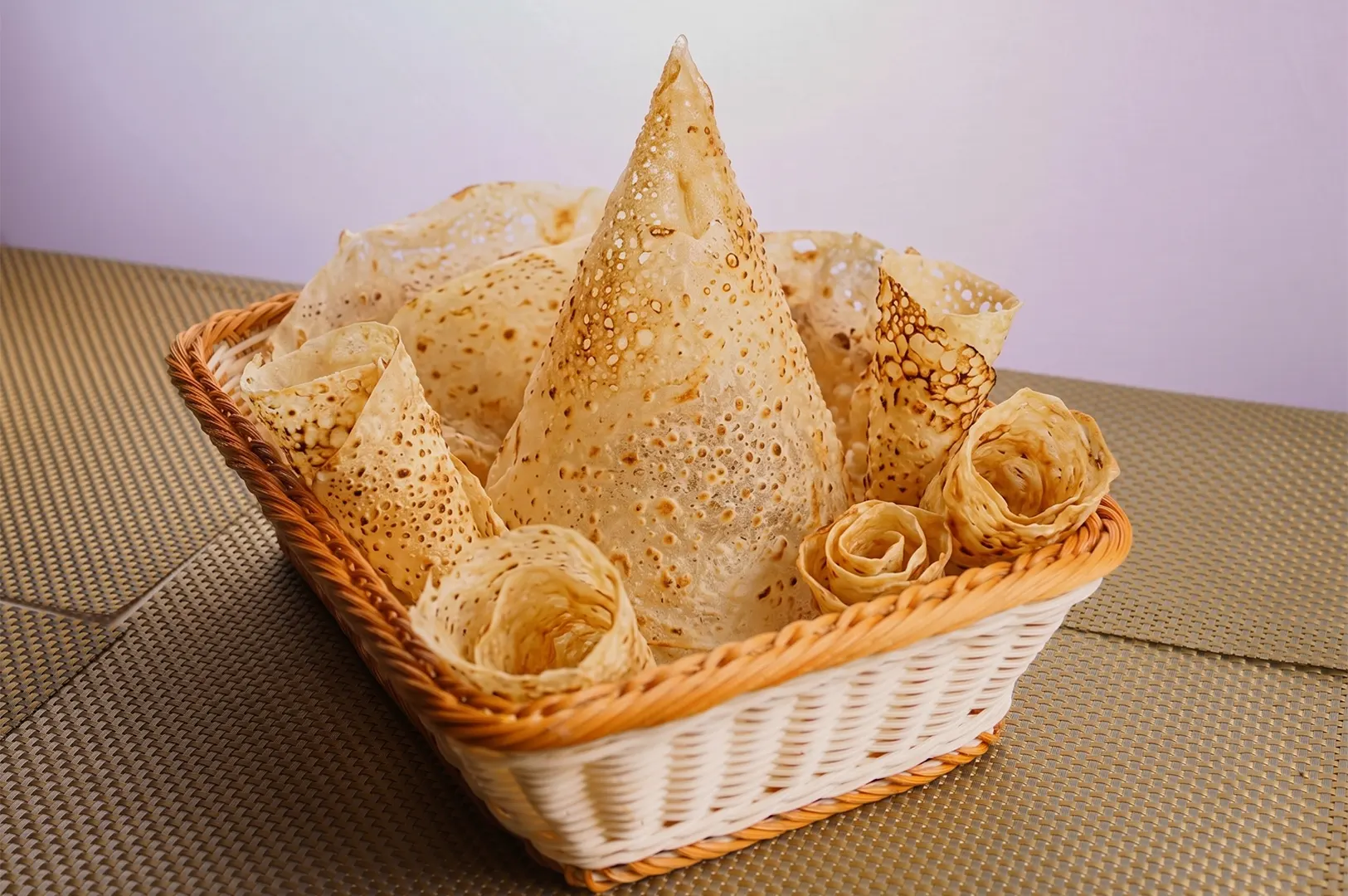
Roti tissue is a deep fried, thin, crispy pancake made from rice flour and traditionally served with sweetened condensed milk or gula melaka syrup. It’s a crowd favorite because of its light, flaky texture that just melts in your mouth. Perfect for sharing or enjoying solo when you want a sweet treat after your meal!
What makes it great: Its delicate texture and sweet finish make it a perfect dessert or snack after a spicy meal.
Where to eat it: Popular at Malay food stalls and mamak eateries, especially along Jalan Pisang and Joo Chiat Road.
How to order like a local: Pair it with teh tarik, a black tea blended with condensed milk and served hot or iced.
10. Lemak Siput Sedut: A Unique Malay Archipelago Dish
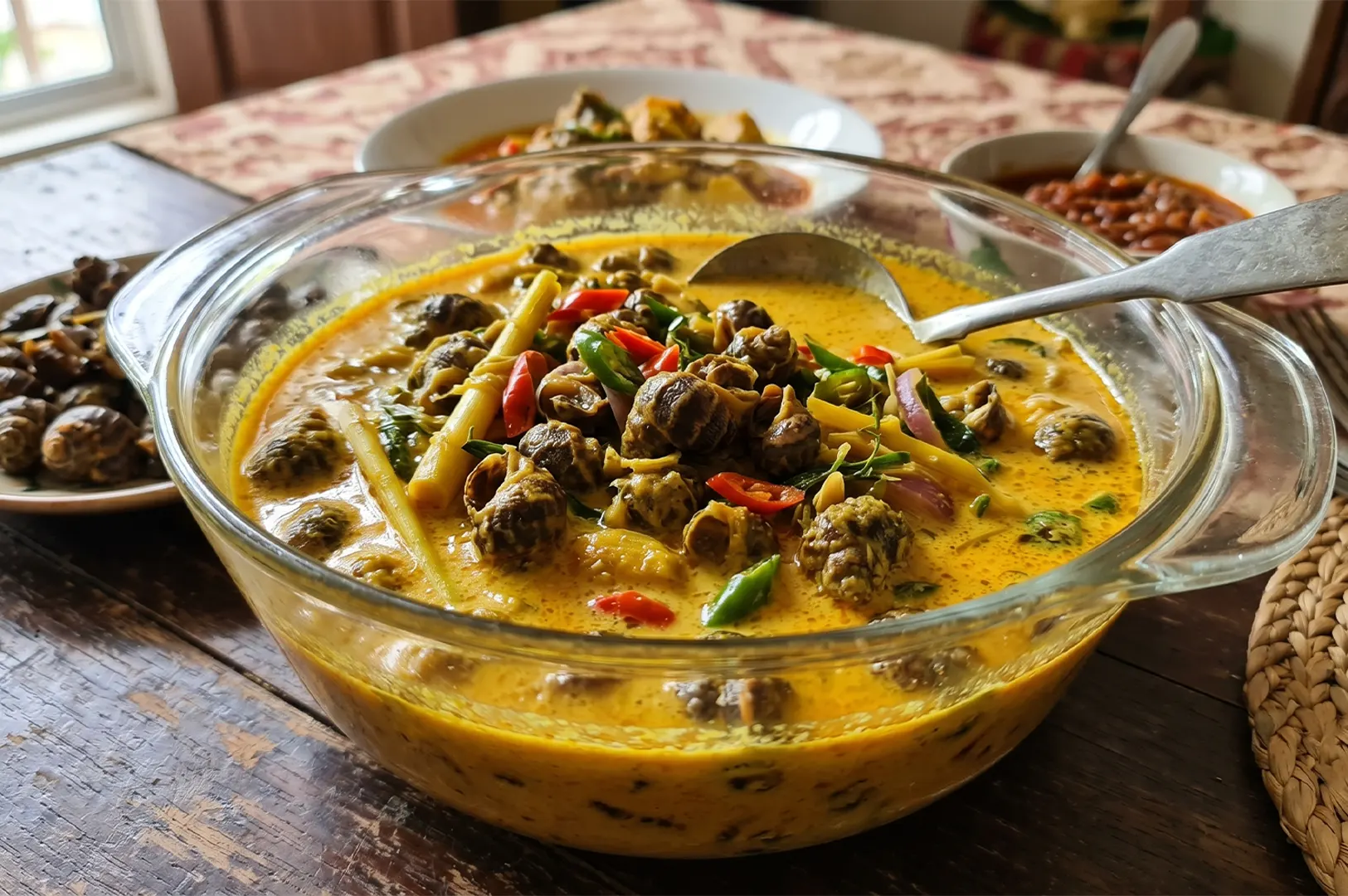
Lemak siput sedut is a coconut rich dish featuring small snails cooked in a spicy and creamy coconut milk gravy, a specialty beloved by the Malay community.
What makes it great: Its unique texture and bold flavors are a testament to the diverse and adventurous palate of Malay cooking.
Where to eat it: Often found in Rumah Makan Minang and other traditional Malay restaurants.
How to order like a local: Enjoy it alongside steamed rice and various side dishes for a complete meal.
Ready to Taste the Tradition of Malay Cuisine?
The landscape of Malay food in Singapore is vast, colorful, and deeply satisfying. From the fiery kick of different sambal varieties to the soothing comfort of coconut milk stews and the crunchy texture of deep fried delights, these dishes tell the story of a rich culinary culture influenced by many similarities between two countries in the Malay Archipelago.
Do not just read about these amazing kampung-style flavors. Grab your family, text your friends, and head down to your nearest hawker centre this weekend. Challenge yourself to order something new, ask for extra sambal, and discover your own personal favorite dish. Happy eating!
For a more comprehensive street food Singapore contents, visit and click sgstreeteatsblog.com